
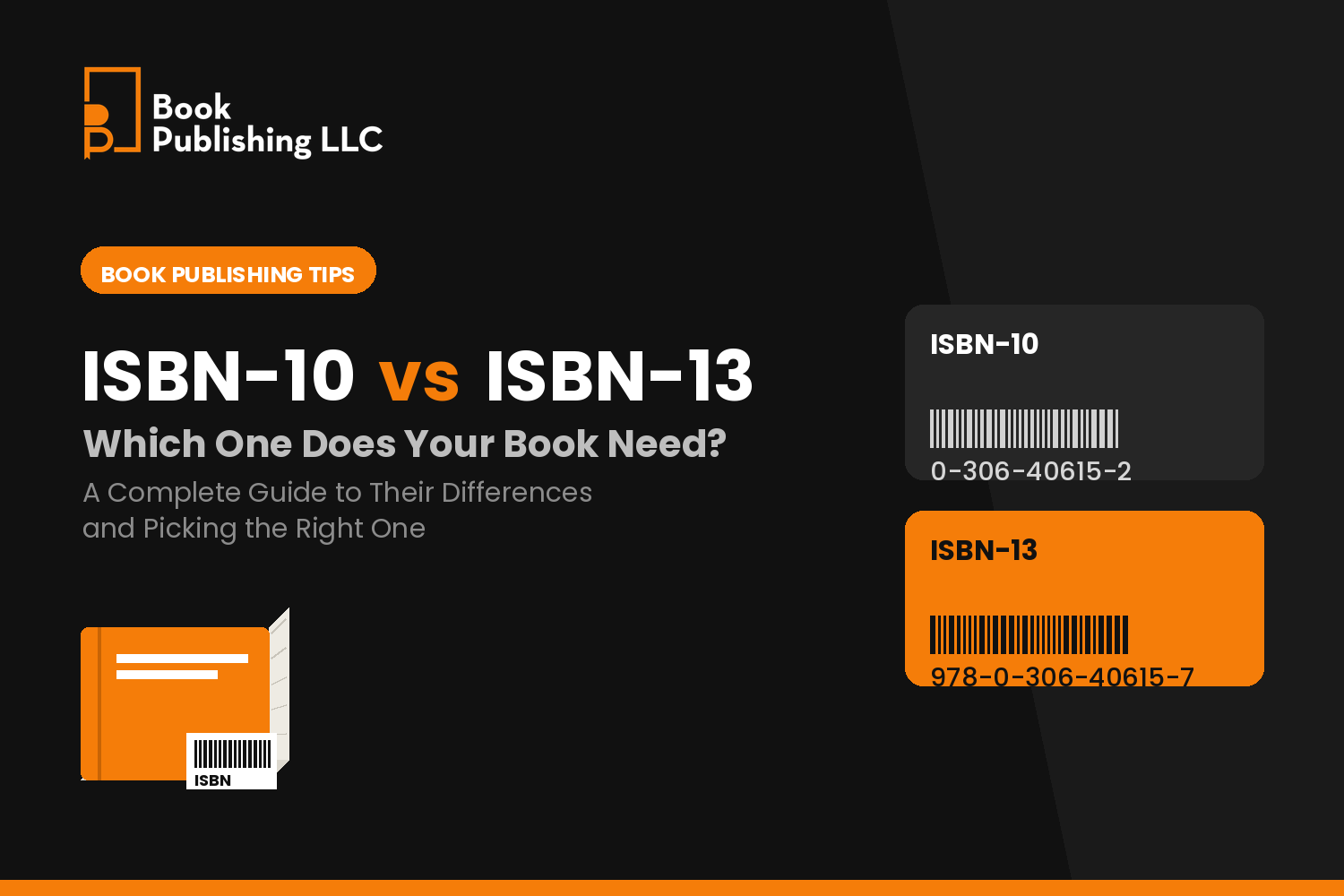
Every author preparing to publish a book eventually runs into one confusing question: ISBN-10 vs ISBN-13, which one do you actually need? Both numbers identify a book, but they belong to two different systems with real differences that affect how your book gets listed, sold and tracked.
This guide breaks down ISBN-10 vs ISBN-13 in simple terms, covering what each number means, how they differ, where to find one and how to get one for your own book. Understanding this small detail early can save authors from listing errors and distribution delays later, and it fits right into the broader process covered in our guide on how to publish a book.
What Is The ISBN Number?
An ISBN, short for International Standard Book Number, is a unique code assigned to a published book. It works like a fingerprint for that specific edition, helping bookstores, libraries, distributors and online retailers identify exactly which book and format is being sold.
Every separate version of a book — paperback, hardcover, eBook or audiobook — usually gets its own number. This makes it possible for a store or library system to know precisely which edition a customer is buying or borrowing, even when the title and author are identical across formats.
Before diving deeper into ISBN-10 vs ISBN-13, it helps to know that both numbers serve this same identification purpose — they just belong to different generations of the same system.
What Is ISBN-10?
ISBN-10 is the original ten-digit numbering system used before the current standard took over. It combines nine digits that identify the publisher and title with a final check digit used to confirm the number is valid.
A typical ISBN-10 looks something like this:
0-306-40615-2
In some cases the final digit appears as the letter X instead of a number, since the validation system needs a value equal to ten. ISBN-10 worked well for decades, but as global publishing output grew, the format started running short of available combinations for new titles.
What Is ISBN-13?
ISBN-13 is the current global standard for identifying books. It expands the number to thirteen digits and typically starts with a 978 or 979 prefix, followed by identifying digits and a newly calculated check digit.
A typical ISBN-13 looks like this:
978-0-306-40615-7
This format was introduced to solve the shrinking number pool under ISBN-10 and to align book identification with the same barcode systems used across global retail. Nearly every book published today receives an ISBN-13 rather than the older ten-digit format.
This is really the heart of the ISBN-10 vs ISBN-13 comparison — an older, shorter code being replaced by a longer, retail-friendly standard.
ISBN-10 vs ISBN-13: Main Differences
| Feature | ISBN-10 | ISBN-13 |
| Digit count | 10 digits | 13 digits |
| Prefix | None | Starts with 978 or 979 |
| Introduced | Older original system | Became standard in 2007 |
| Check digit | Number or letter X | Fully numeric |
| Used for new books | Rarely assigned today | Standard for all new titles |
| Barcode compatibility | Limited | Matches global retail barcodes |
The short version of ISBN-10 vs ISBN-13 comes down to this: ISBN-10 is the older, shorter format that is rarely issued anymore, while ISBN-13 is the modern format every new book needs for proper retail and library distribution.
Where Can You Find The ISBN On A Book?
The ISBN is usually printed in a few predictable spots depending on the book format.
- Back cover — most paperbacks and hardcovers print it near the barcode
- Copyright page — nearly every book lists the ISBN on the page just after the title page
- Spine — some hardcovers include a shortened version near the bottom of the spine
- eBook product listing — digital editions display the ISBN on the retailer’s product page rather than on a physical page
- Library catalog record — libraries store the ISBN in their catalog system, searchable alongside the title
If a physical copy isn’t available, searching the book title alongside the publisher’s name on a retailer or library site will usually surface the ISBN within the listing details.
How Do I Get An ISBN Number For My Book?
Authors have a few different paths to getting an ISBN, depending on where they live and how they plan to publish.
- Purchase directly — in the United States, ISBNs are issued through Bowker’s official registration system
- Use a free platform ISBN — services like Amazon KDP offer a free ISBN, though it ties the book to that specific platform
- Buy in bulk — purchasing multiple ISBNs at once is usually cheaper per number for authors planning several formats or future titles
- Work with a publisher — full-service publishers often include ISBN registration as part of their publishing packages
For authors who want their own name listed as the publisher of record, buying an independent ISBN is generally the better long-term choice compared to a free platform-assigned number. Book Publishing LLC’s book publishing service includes ISBN registration alongside editing, formatting and distribution, so authors don’t have to handle it separately.
Do Different Book Formats Need Different ISBNs?
Yes. Each format of a book counts as a separate edition, and separate editions each need their own ISBN.
That means:
- A paperback needs its own ISBN
- A hardcover needs a different ISBN
- An eBook needs a separate ISBN as well
- An audiobook needs its own unique number too
This system exists so retailers and distributors can track sales, pricing and availability accurately for each version. Trying to reuse one ISBN across multiple formats causes listing conflicts and sales-tracking errors, which is why publishers keep the numbers separate from the start.
Why ISBN Matters For Self-Published Authors
Independent authors sometimes assume an ISBN is optional, but it plays a bigger role than most people expect.
Professional Identification
An ISBN gives a self-published book the same recognized identity as titles from major publishing houses, which matters for credibility with retailers and readers alike.
Wider Distribution Access
Many bookstores, libraries and distributors rely on ISBN records to list and stock titles, so a missing or incorrect ISBN can limit where a book actually shows up.
Accurate Sales Data
Separate ISBNs across formats let authors see exactly how each edition performs instead of one blended, confusing sales number.
Stronger Long-Term Branding
Owning your own ISBN, rather than relying on a free platform number, keeps you listed as the publisher of record on your own terms.
Whichever stage you’re at, keeping the ISBN-10 vs ISBN-13 distinction in mind before you publish helps avoid listing mistakes that are far more annoying to fix after your book is already live.
Frequently Asked Questions
Is ISBN-13 Better Than ISBN-10?
Yes, ISBN-13 is the current global standard and works with every major retailer and library system.
Can The Same ISBN Work For Paperback And eBook?
No, each format needs its own separate ISBN.
Are Older ISBN-10 Numbers Still Valid?
Yes, existing ISBN-10 numbers remain valid, though new books are assigned ISBN-13.
Do I Need An ISBN To Self-Publish A Book?
Not always, but an ISBN is required for wide bookstore and library distribution.
Final Thoughts
Understanding ISBN-10 vs ISBN-13 helps authors avoid confusion during one of the final steps before publishing. ISBN-10 served the industry for decades, but ISBN-13 is now the standard every new book needs for proper listing and distribution.
Getting this detail right is a small but important part of preparing a book for the market, and it’s exactly the kind of step Book Publishing LLC handles for authors as part of a complete publishing package, alongside editing, formatting, cover design and distribution setup.
Authors who work through the full ISBN-10 vs ISBN-13 decision before launch tend to avoid the retailer errors and re-listing headaches that come from choosing the wrong format later.